Luther Monson, Founding Engineer at Gas City

Luther Monson

Open Source · AI · Containers · VMs · Kubernetes · Windows · Go by way of PHP

ephemerd: One Daemon, a Fresh Runner Per Job, Every OS

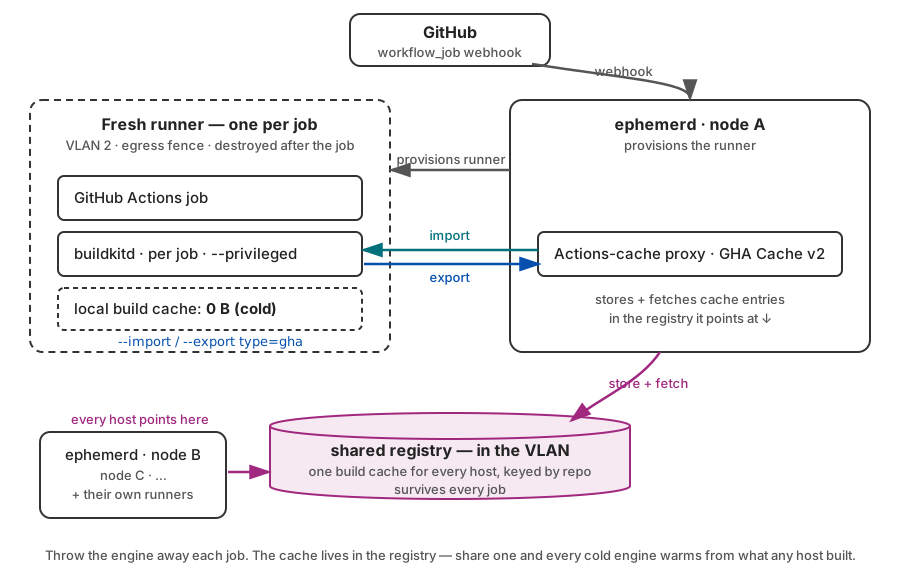
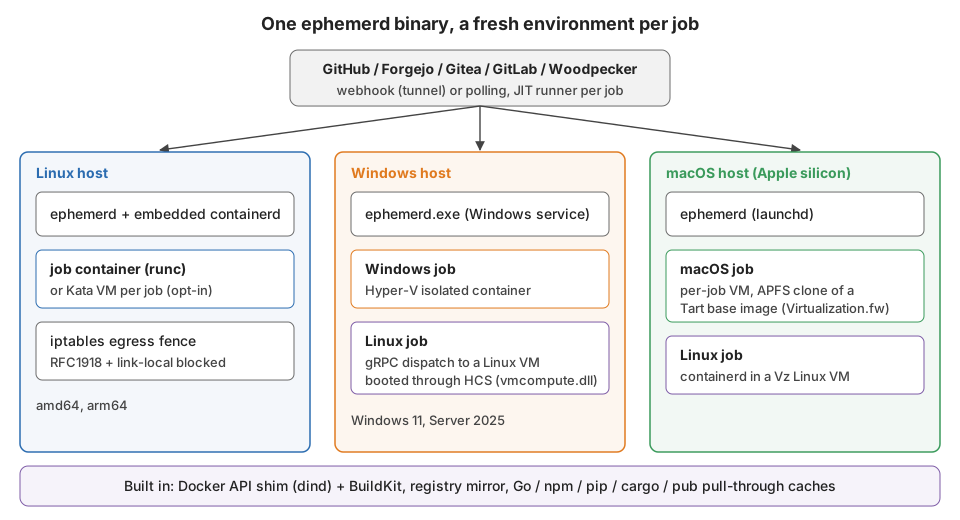
A single Go binary that runs self-hosted GitHub Actions runners on Linux, Windows and macOS, with a new container or VM for every job.
6-Minute Read

ephemerd architecture across Linux, Windows and macOS hosts

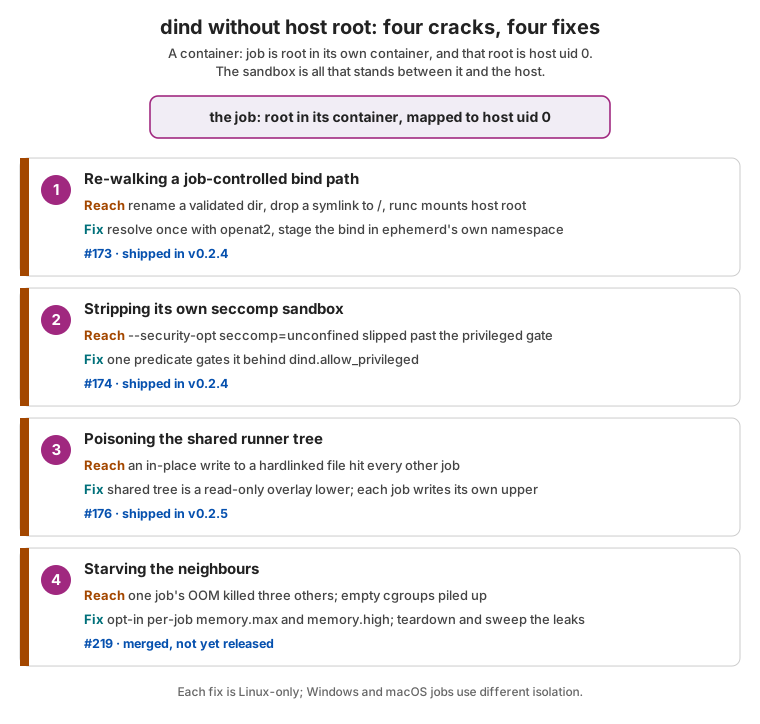
I have CI that needs Linux amd64, Linux arm64, Windows and macOS. GitHub-hosted runners for all four get expensive fast, especially the arm64 and Mac minutes. Self-hosted runners fix the bill and create a different problem. A stock actions/runner on a box you own runs whatever the workflow says. It keeps whatever the last job left behind. And it’s one fork PR away from somebody running code on your LAN.
Rolling Your Own KV Store Instead of Embedding Redis

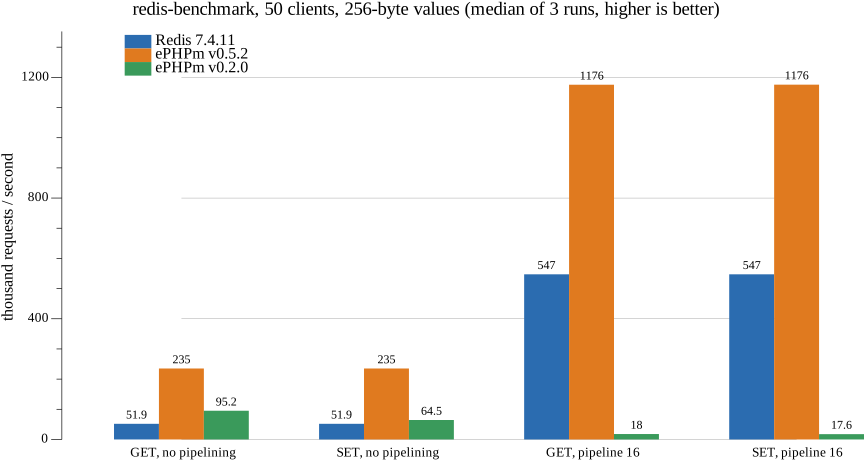
Why ePHPm has its own Redis-compatible cache built in instead of running Redis. It also covers a bug that hid in it for four months and how it compares to real Redis on the same machine.

11-Minute Read

Bar chart of redis-benchmark GET and SET throughput against Redis 7.4, ePHPm v0.5.2 and ePHPm v0.2.0

Every PHP deployment I’ve run eventually grew a Redis. Sessions, the WordPress object cache, Laravel’s cache and locks, rate limiting. ePHPm is supposed to be one binary that replaces nginx + php-fpm + Redis, so it needed a cache in the box. I didn’t want to write one. This post covers why I did anyway and how it’s built. It also covers the bug that sat in its eviction code from March until last month. Then I compare it against a stock Redis on the same machine with…

Faking MySQL's Quirks Well Enough to Fool WordPress

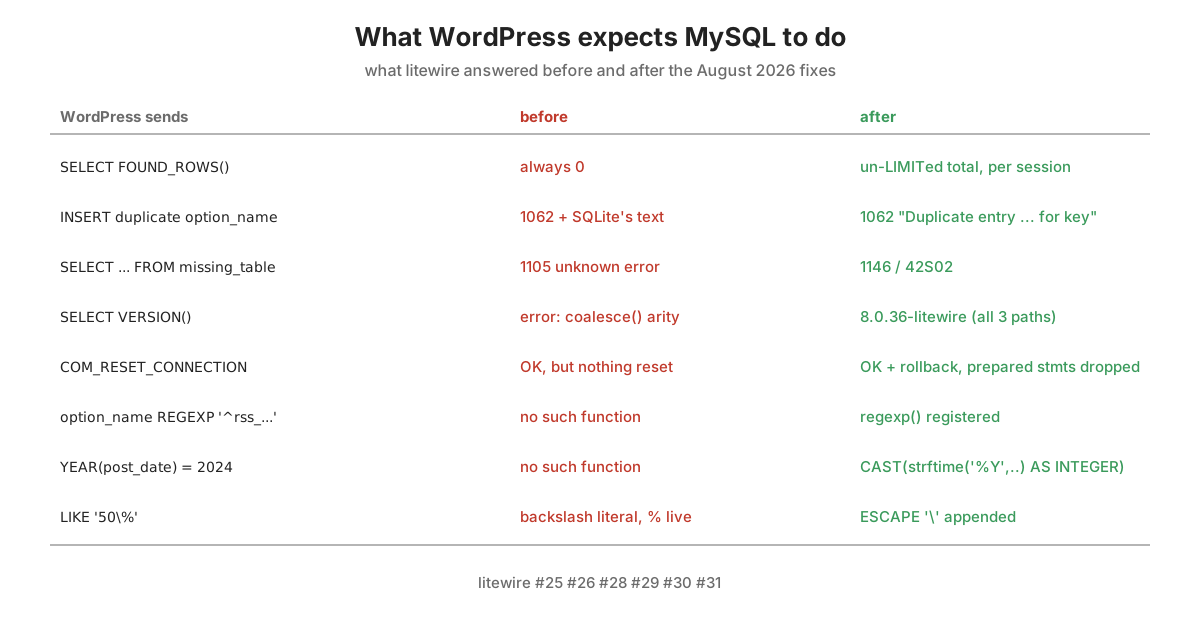
Passing WordPress's install tests didn't mean litewire behaved like MySQL. This is the second round of fixes, for the small MySQL behaviors that WordPress and Laravel quietly depend on.

10-Minute Read

A table of MySQL behaviors WordPress relies on, with what litewire answered before and after the August fixes

Last month I wrote about running SQLite behind a MySQL socket with litewire. I ended on “passing an install suite is not the same thing as behaving like MySQL”. That turned out to be accurate. On August 10th a few things happened at once:

Requests That End Wrong: A 200 That Was Really a Crash

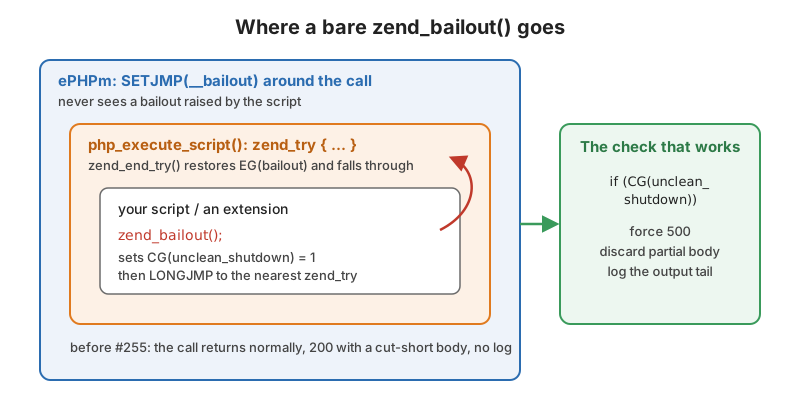
Three ePHPm bugs lived in how an embedded PHP request starts and ends. A bailout returned 200, $_POST came up empty and a SIGTERM corrupted the heap.

10-Minute Read

Diagram of a bare zend_bailout being absorbed by php_execute_script's own zend_try instead of reaching ePHPm's guard

The scariest response a server can send isn’t a 500. It’s a 200 that should have been a 500. A crash is loud. The pod restarts, an alert fires, somebody looks. A truncated page with a success status code is quiet. Your CDN caches it and the health check calls the box healthy. A client parses half a document as if it were the whole thing.

Database Connection Pooling with Smart Reset

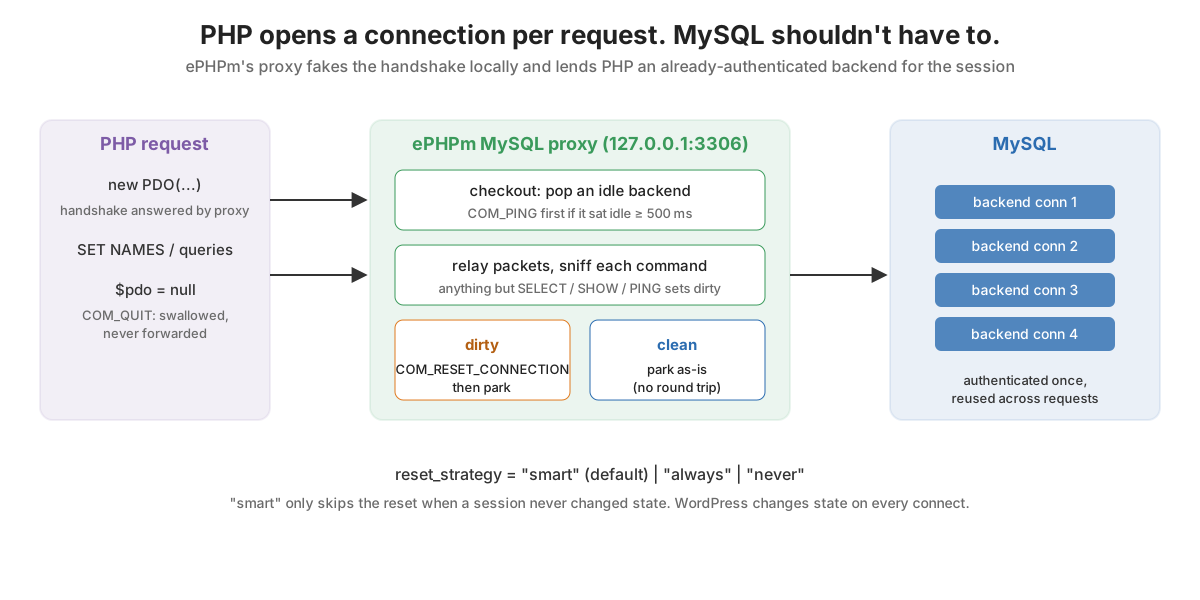
PHP opens a new MySQL connection on every request, but ePHPm reuses them and cleans up only the ones that need it. Here's how that works, two bugs it had and how much load it takes off MySQL.

10-Minute Read

PHP request connecting to the ePHPm MySQL proxy, which lends it a pooled backend connection and resets it only if the session was dirtied

PHP’s share-nothing model is one of its best properties. It has one expensive side effect: a request can’t keep a database connection for the next request. php-fpm gives you PDO::ATTR_PERSISTENT and mysqli’s p: hosts. But those are per-worker-process. PDO’s keep whatever session state the last request left behind. mysqli at least resets the session with COM_CHANGE_USER on reuse. And almost nobody turns them on. So in practice every PHP request does a TCP connect, a MySQL…

Clustered SQLite in ePHPm, Part 1: Replication by Sidecar

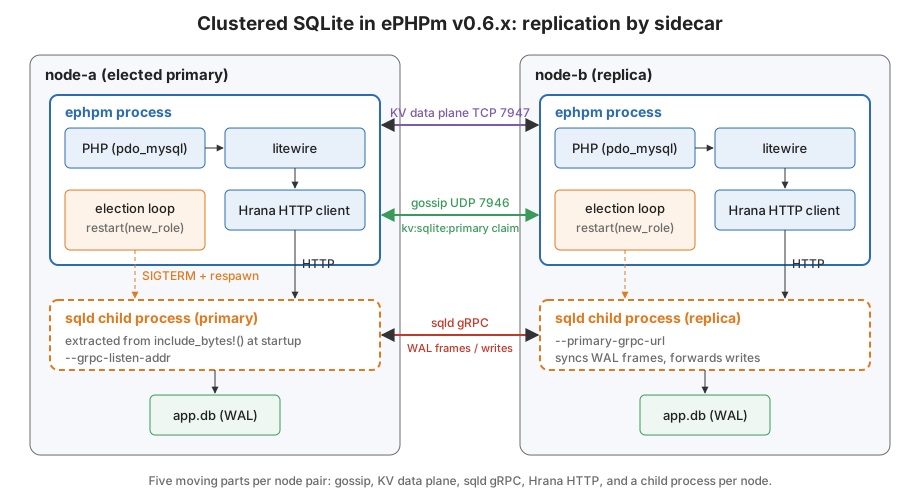
ePHPm first made SQLite highly available by embedding sqld as a child process. This is how that worked and the list of things that went wrong with it.

9-Minute Read

Two ePHPm nodes, each running an embedded sqld child process, connected by gossip, a KV data plane and sqld gRPC

Most PHP sites I have run in the last twenty years did not need a MySQL server. They needed a database, and MySQL was the one every framework spoke. With ePHPm I have been trying to get rid of that server for the common case. The piece that makes it possible is litewire. PHP connects with plain pdo_mysql. litewire speaks the MySQL wire protocol, and the queries land in a SQLite file. WordPress and Laravel don’t know the difference. No mysqld, no child processes, just ephpm and a .db file.

Atomic File Replacement on NTFS Is Not rename + fsync

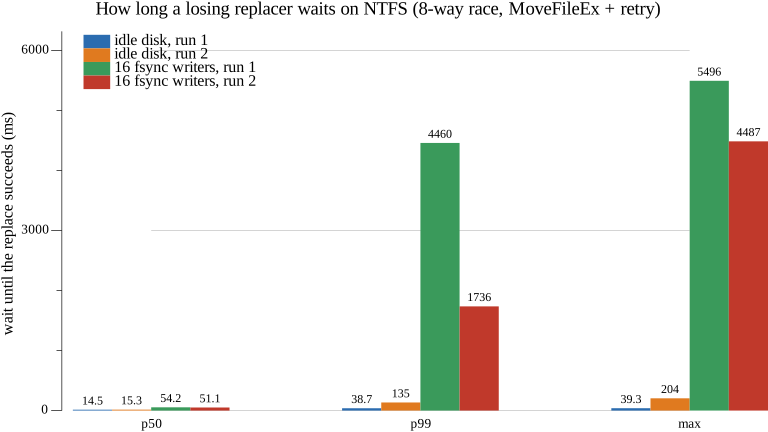
The Unix recipe for durable atomic file replacement doesn't translate to Windows. This is what shipmates uses instead, plus the delete-pending window that made an 8-way test fail only when the whole suite ran.

7-Minute Read

How long a losing concurrent replacer waits on NTFS, idle disk vs a disk under fsync load

shipmates writes a lot of small state files that other processes read. Voyage plans and state, tracker files. Each of them has to be replaced atomically, so a reader sees the old file or the new one and never half of each. Each also has to be replaced durably. When the function returns success, a power cut doesn’t take it back. Every Unix programmer knows the recipe for that. It doesn’t work on Windows, and the reasons are more interesting than “Windows is different”.

Gossip-Based Clustering for PHP Apps

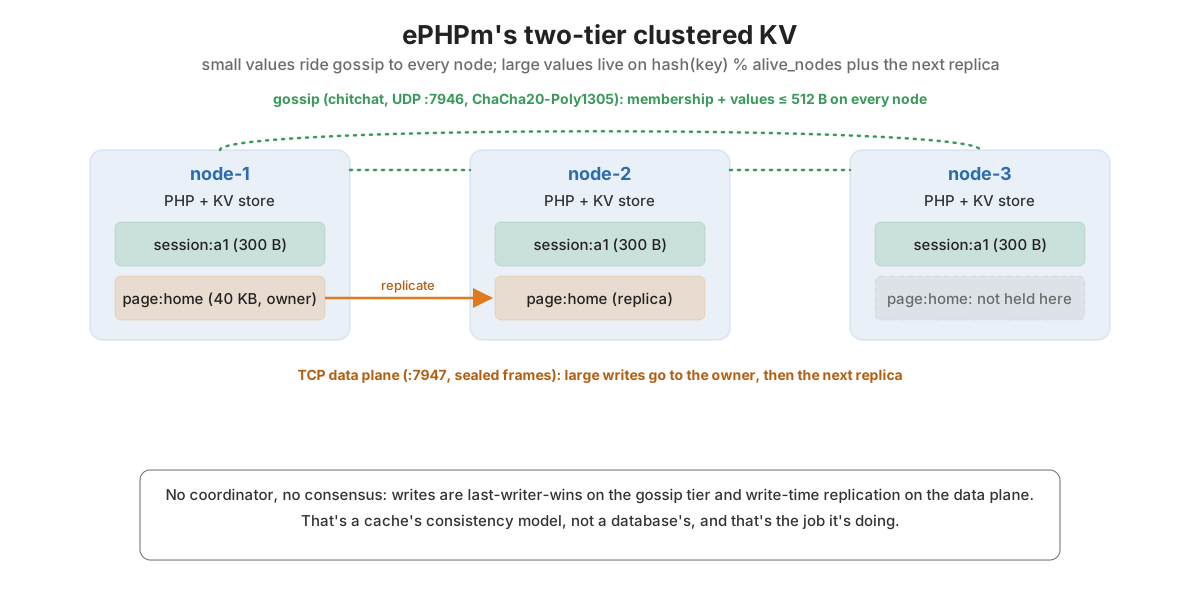
How ePHPm servers find each other, share data and handle a server joining or leaving. It also measures how fast a write reaches the other servers and covers a bug I found while measuring it.

11-Minute Read

Three ePHPm nodes: small values replicated to every node over gossip, a large value stored on its owner and one replica over a TCP data plane

Most PHP developers never touch clustering primitives. That’s by design. PHP is share-nothing. Each request starts from zero, and anything shared lives somewhere else. Sessions go in Redis. Cache goes in Redis or Memcached. Locks go in Redis. When you run two app servers, the “cluster” is really two stateless boxes pointed at the same Redis. That works until Redis is the thing you’re trying not to run.

Rescuing a Windows Dynamic Disk Over USB with WSL2 and USB/IP

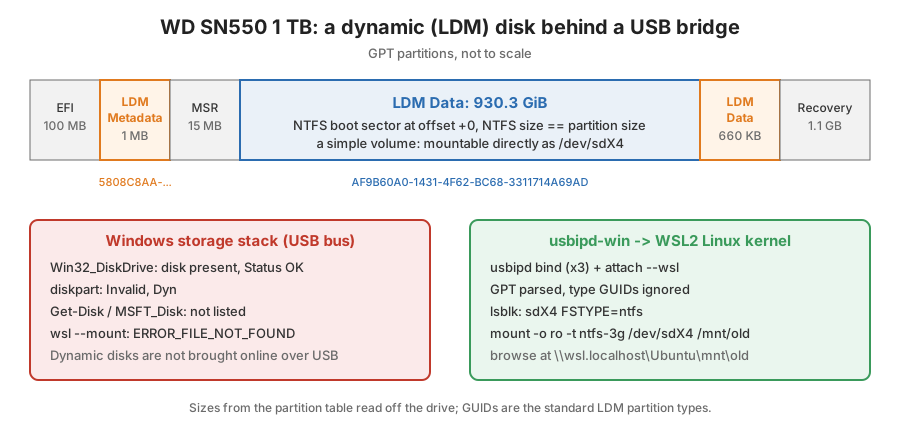
Windows refused to bring an old dynamic disk online over USB. Handing the raw USB device to WSL2's Linux kernel with usbipd-win got every file back.

10-Minute Read

GPT layout of the 1 TB drive with LDM metadata and a 930 GiB LDM data partition, and the two paths: the Windows storage stack refusing it and usbipd passing it to WSL2

I pulled a 1 TB NVMe out of an old Windows box, dropped it in a USB enclosure and plugged it in. Windows showed nothing. No drive letter, no “initialize this disk” prompt, nothing in Explorer. Disk Management listed it as Invalid. The enclosure’s booklet said to “bring the disk online”, which silently did nothing. The data was completely intact. Windows was refusing on policy grounds, not because anything was broken. Getting it back meant going around the Windows…

Recent Posts

Categories

About

Luther is a 20+ year software veteran specializing in backend APIs and architecting products. Founding engineer at Gas City building open-source AI software factories on Beads, the durable work graph for coding agents.