
Luther Monson, Staff Software Engineer at SUSE

Luther Monson

Go by way of PHP · Containers · VMs · Windows · Kubernetes

Rescuing a Windows Dynamic Disk Over USB with WSL2 and USB/IP

Windows refused to bring an old dynamic disk online over USB. Handing the raw USB device to WSL2's Linux kernel with usbipd-win got every file back.
10-Minute Read

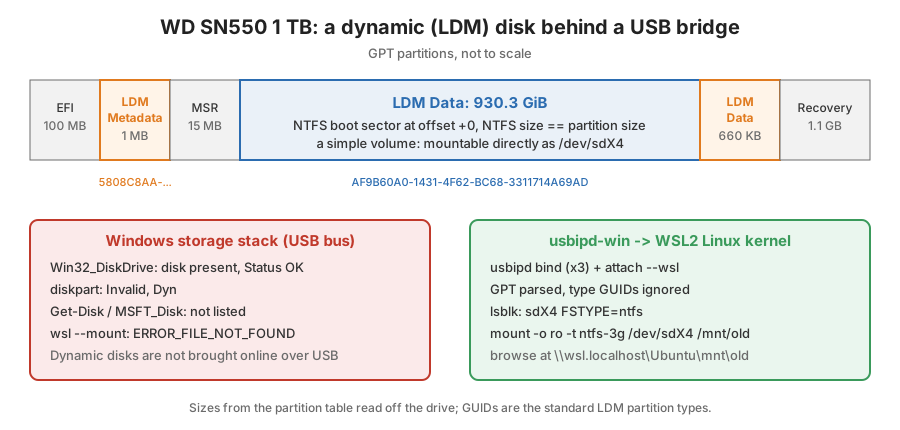
GPT layout of the 1 TB drive with LDM metadata and a 930 GiB LDM data partition, and the two paths: the Windows storage stack refusing it and usbipd passing it to WSL2

I pulled a 1 TB NVMe out of an old Windows box, dropped it in a USB enclosure and plugged it in. Windows showed nothing. No drive letter, no “initialize this disk” prompt, nothing in Explorer. Disk Management listed it as Invalid. The enclosure’s booklet said to “bring the disk online”, which silently did nothing. The data was completely intact. Windows was refusing on policy grounds, not because anything was broken. Getting it back meant going around the Windows…
Cloud-Init ISOs in Pure Go with go-proxmox

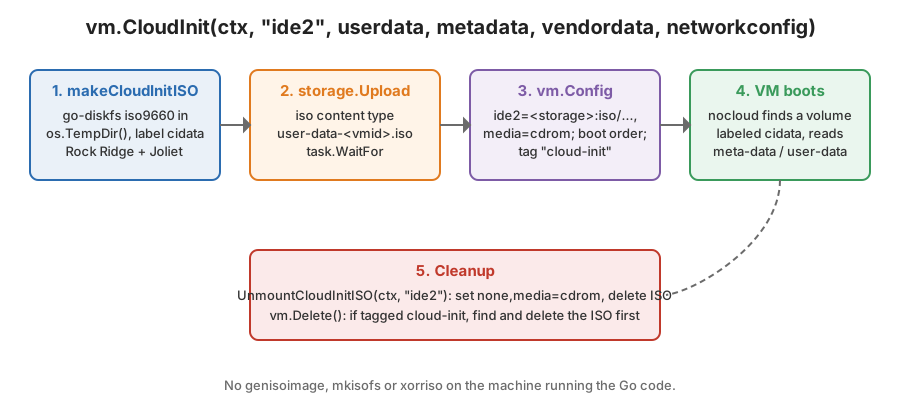
Building nocloud cloud-init ISOs in memory with go-diskfs, uploading them to Proxmox and mounting them on a VM in one call, with no genisoimage.

8-Minute Read

Flow: makeCloudInitISO, upload to Proxmox storage, mount as CD-ROM, VM boots and cloud-init reads the cidata volume, cleanup

Proxmox’s built-in cloud-init support is fine for the basics: a user, an SSH key, an IP config. It falls apart the second you want your own user-data, vendor-data or a real network-config. The GUI and the ci* options only expose a handful of fields. The escape hatch is cicustom pointing at snippet files, and that means getting files onto the Proxmox host’s filesystem first. The usual alternative is building a nocloud ISO yourself with genisoimage or mkisofs. That means a system…

Waiting on Proxmox: UPIDs, Tasks and WaitFor in Go

Most Proxmox VE API calls that change something hand you a UPID instead of a result. Here is how go-proxmox turns that string into something you can wait on.

6-Minute Read

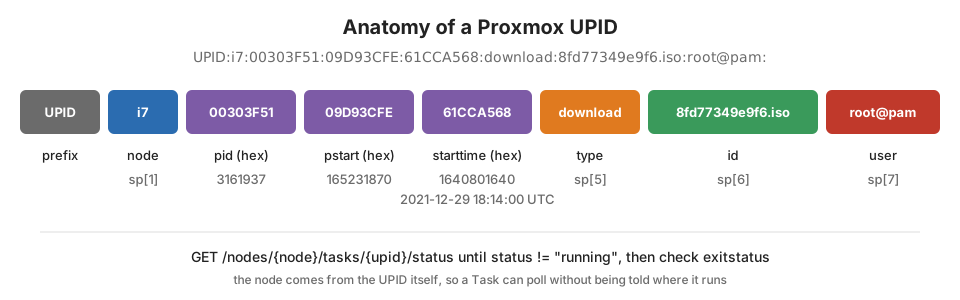
Diagram breaking a Proxmox UPID string into node, pid, pstart, starttime, type, id and user

If you start automating Proxmox VE through the API, one thing trips you up first. Almost nothing you ask it to do is finished when the HTTP call returns. Start a VM, clone a template, download an ISO to storage, delete a disk… the response is a single string that looks like a typo. The actual work is happening in a worker process on the node. If your next call depends on that work being done, you have to go find out when it’s done.

Recent Posts

Categories

About

Luther is a 20+ year software veteran specializing in backend APIs and architecting products. Employed at SUSE as the Team Lead for the Containers on Windows Team working on Rancher + Kubernetes




