Luther Monson, Staff Software Engineer at SUSE

Luther Monson

Go by way of PHP · Containers · VMs · Windows · Kubernetes

Calling Rust From PHP Without a Socket, Part 2: Making Existing Code Use It

Thirteen Composer packages let existing Redis and database code in WordPress, Laravel and Symfony use ePHPm's built-in versions. This post covers what's in them and the bugs they turned up.
8-Minute Read

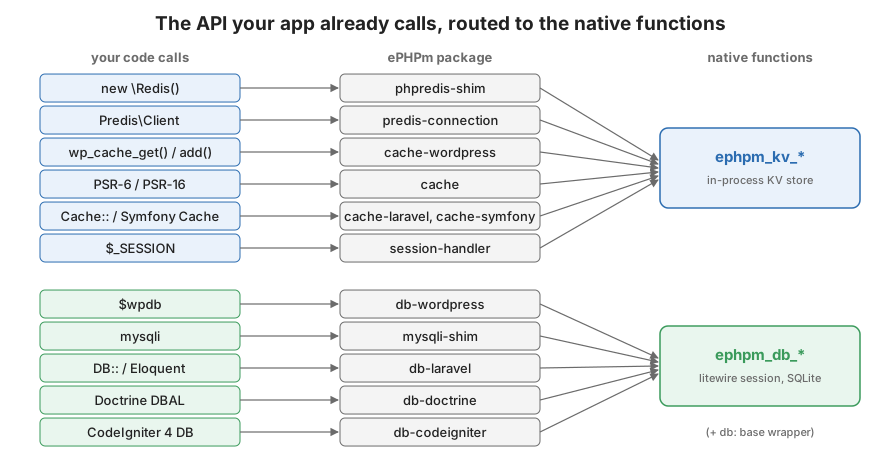
The APIs PHP apps already call, mapped through ePHPm wrapper packages onto ephpm_kv_* and ephpm_db_*

Part 1 covered the plumbing. ePHPm registers ephpm_kv_* and ephpm_db_* functions that call straight into Rust. A cache read through one costs about a tenth of a microsecond instead of a loopback round trip. That’s nice and also useless on its own. Nobody is going to rewrite their WordPress object cache or their Laravel cache store around a function called ephpm_kv_set(). Applications talk to existing APIs instead:
What Does One More WordPress Site Cost?

I measured what each extra WordPress tenant on one ePHPm instance costs in RAM, file descriptors, CPU and disk. The sweep ran from 10 to 1000 sites.

9-Minute Read

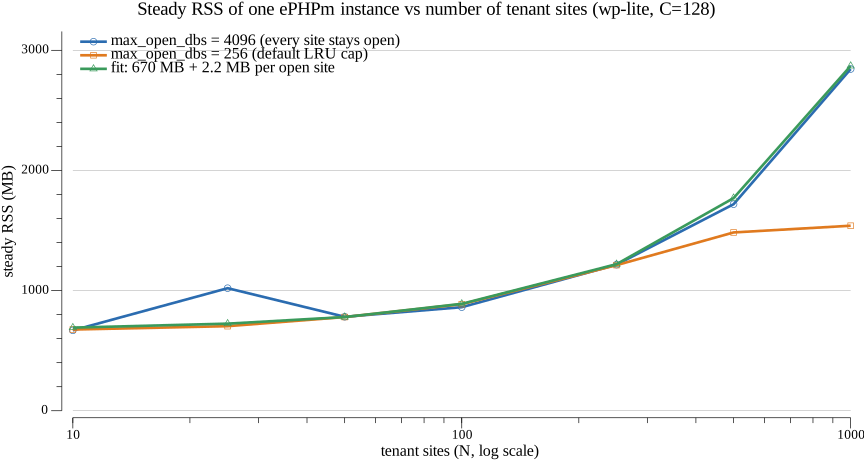
Line chart of ePHPm steady RSS against tenant site count: linear at about 2.2 MB per site with every site open, flat past the default LRU cap of 256

ePHPm v0.7.0 shipped per-site multi-tenancy. Point [server] sites_dir at a directory and every Host maps to its own docroot and its own Turso database file. One process serves all of them. The first question anybody asks about that is “how many sites fit on a box?” The honest way to answer it is to turn the question around. What does one more site cost? If you know the marginal RAM, file descriptors, CPU and disk for a tenant, the box size falls out of arithmetic.

Faking MySQL's Quirks Well Enough to Fool WordPress

Passing WordPress's install tests didn't mean litewire behaved like MySQL. This is the second round of fixes, for the small MySQL behaviors that WordPress and Laravel quietly depend on.

10-Minute Read

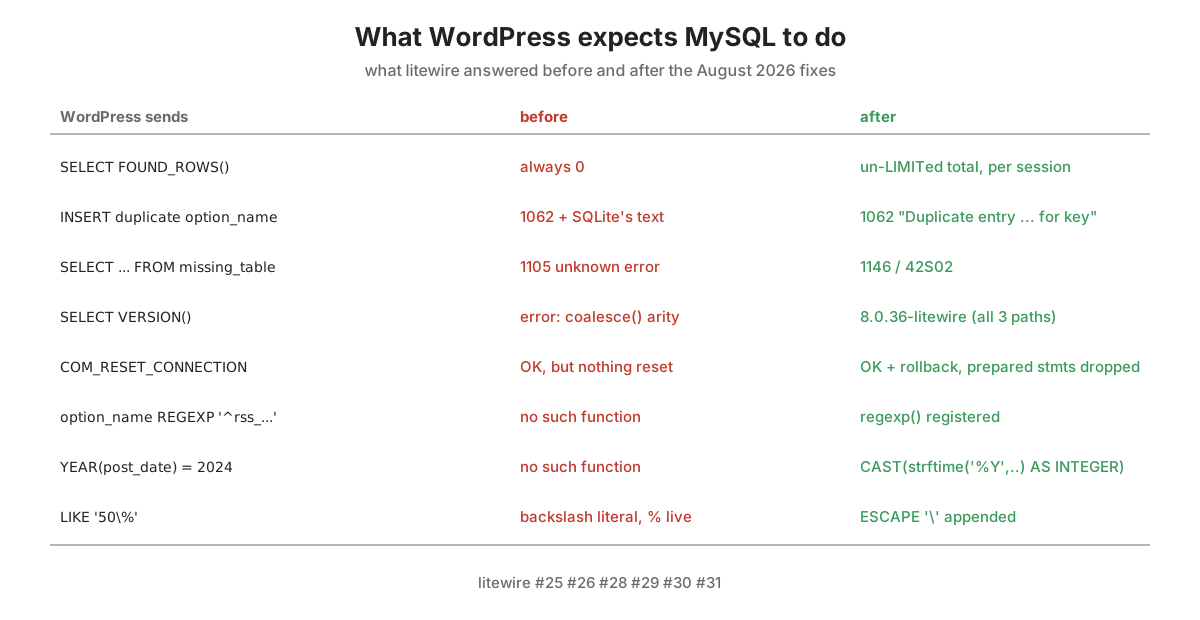
A table of MySQL behaviors WordPress relies on, with what litewire answered before and after the August fixes

Last month I wrote about running SQLite behind a MySQL socket with litewire. I ended on “passing an install suite is not the same thing as behaving like MySQL”. That turned out to be accurate. On August 10th a few things happened at once:

Building a Custom SAPI - How PHP Actually Talks to the Outside World

php-fpm, mod_php and the PHP command line all plug into PHP the same way. Here's how ePHPm does it, and the shortcut that broke WordPress.

9-Minute Read

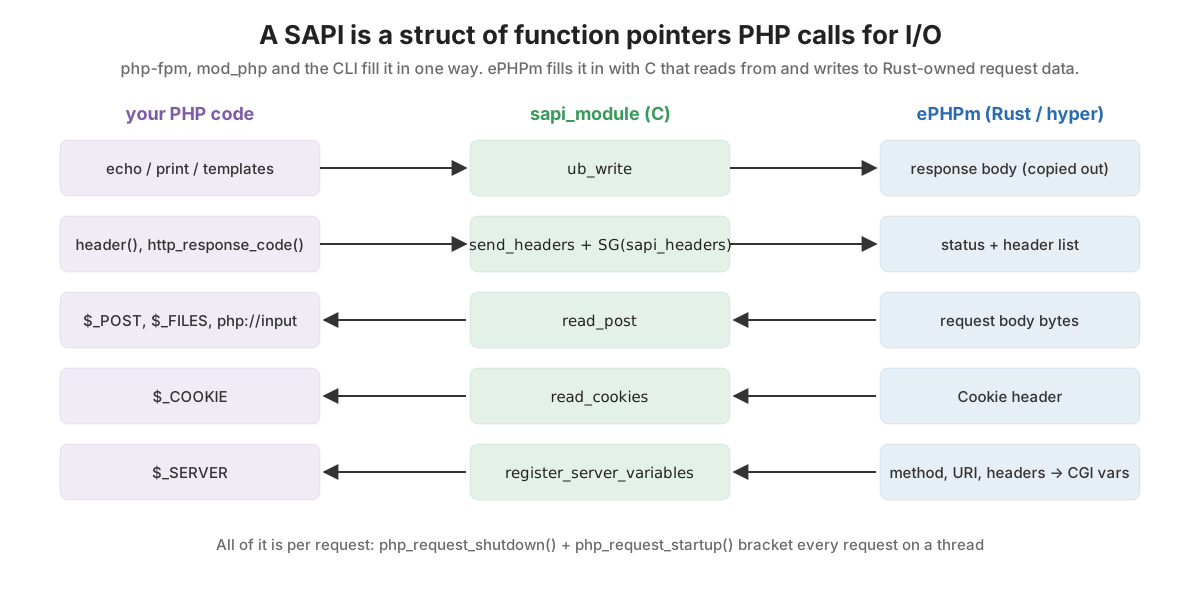
Table mapping PHP operations like echo, header(), $_POST, $_COOKIE and $_SERVER to SAPI callbacks and to the Rust side of ePHPm

If you’ve only ever run PHP behind nginx, you’ve probably never had to think about how echo reaches a socket. When you embed PHP like ePHPm does, it’s the first thing you have to answer. The answer is a SAPI. There is very little written about implementing one. Most of what I know came from reading sapi/cli, sapi/cgi and sapi/embed in php-src. Then I found out which parts I’d misread. This is the write-up I wanted back in March.

SQLite as a Production Database via Protocol Translation

litewire speaks the MySQL wire protocol on one side and SQLite on the other. That lets WordPress and Laravel run against a .db file without a code change.

10-Minute Read

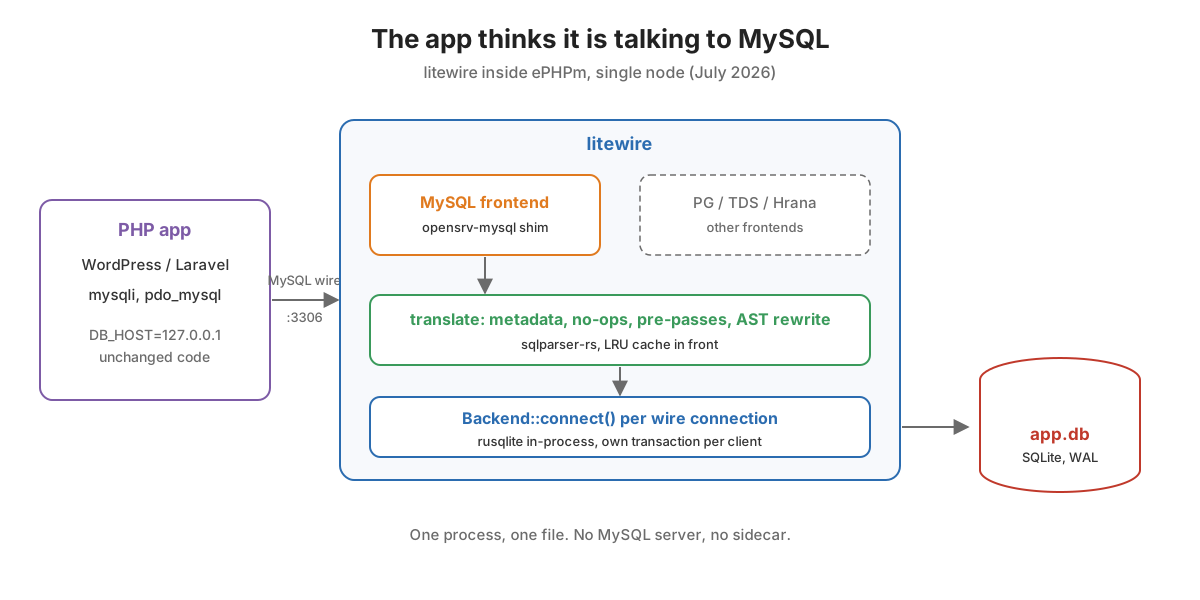
A PHP app connecting over the MySQL wire protocol on port 3306 to litewire, which translates the SQL and runs it against a SQLite file

Most of the PHP sites I’d put on ePHPm don’t need a MySQL server. A brochure WordPress, an internal Laravel tool, a preview environment that lives for an afternoon. What they do need is something that looks like MySQL, because mysqli and pdo_mysql are the only database drivers their code has ever been pointed at. I mentioned this in the ePHPm pragmatism post as a one-paragraph “because”. This is the longer version, now that WordPress 7.0 and Laravel 13 both install and…

Recent Posts

Categories

About

Luther is a 20+ year software veteran specializing in backend APIs and architecting products. Employed at SUSE as the Team Lead for the Containers on Windows Team working on Rancher + Kubernetes