
Luther Monson, Staff Software Engineer at SUSE

Luther Monson

Go by way of PHP · Containers · VMs · Windows · Kubernetes

Clustered SQLite in ePHPm, Part 3: CDC Over the Cluster Channel

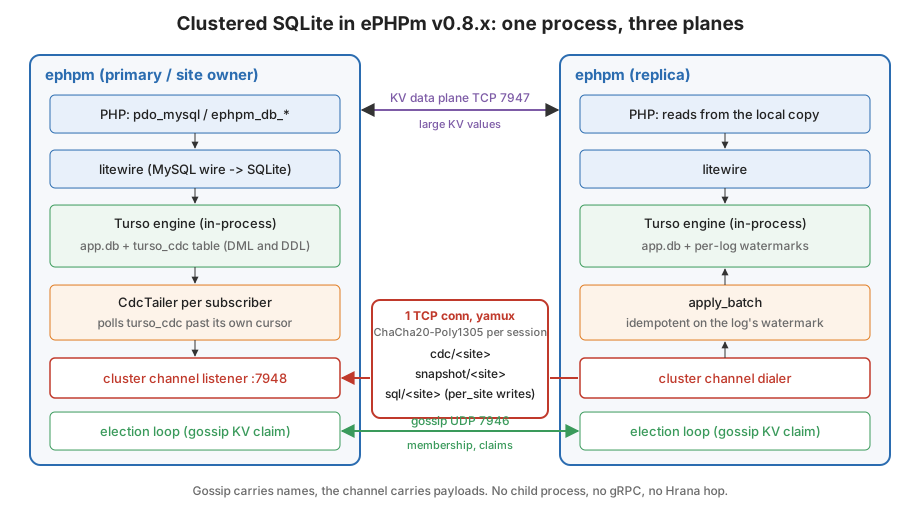
ePHPm ships Turso's change data capture stream between nodes over one authenticated, multiplexed TCP connection. This covers how that works and the two failover bugs that showed up when the e2e suite killed the primary.
15-Minute Read

Two ePHPm nodes connected by gossip on UDP 7946, the KV data plane on TCP 7947 and the cluster channel on TCP 7948 carrying cdc, snapshot and sql streams

By the end of Part 2 ePHPm v0.7.0 ran exactly one SQLite engine in process. That was Turso, for single-node and clustered mode alike. The sidecar was gone. What I skipped over is how a replica actually gets the primary’s writes, and what happens when the primary dies with data on it. That’s this post.
What Does One More WordPress Site Cost?

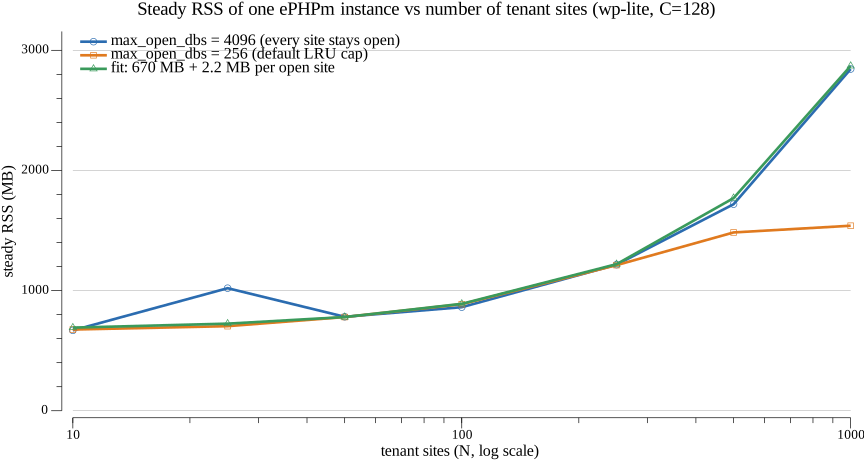
I measured what each extra WordPress tenant on one ePHPm instance costs in RAM, file descriptors, CPU and disk. The sweep ran from 10 to 1000 sites.

9-Minute Read

Line chart of ePHPm steady RSS against tenant site count: linear at about 2.2 MB per site with every site open, flat past the default LRU cap of 256

ePHPm v0.7.0 shipped per-site multi-tenancy. Point [server] sites_dir at a directory and every Host maps to its own docroot and its own Turso database file. One process serves all of them. The first question anybody asks about that is “how many sites fit on a box?” The honest way to answer it is to turn the question around. What does one more site cost? If you know the marginal RAM, file descriptors, CPU and disk for a tenant, the box size falls out of arithmetic.

Clustered SQLite in ePHPm, Part 2: Adding Turso

How I decided a beta database engine was ready by testing it instead of reading its version number. ePHPm v0.7.0 replaces both rusqlite and sqld with Turso.

9-Minute Read

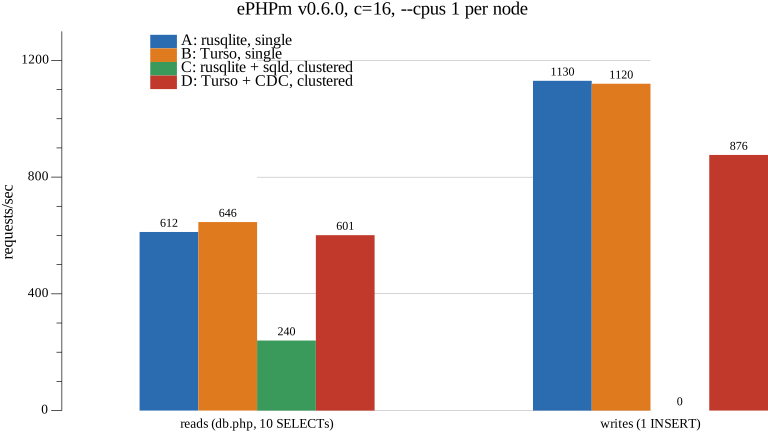
Bar chart of four SQLite lanes at 16 concurrent connections: rusqlite and Turso single node, sqld and Turso CDC clustered

Part 1 ended with ePHPm running two SQLite engines. rusqlite ran in-process for a single node, and an embedded sqld child process ran for a cluster. The sidecar fell off a cliff past four concurrent writers. The best fix I could ship was a semaphore set to 1. This post is about replacing both engines with one, and about how I decided that engine was ready.

Recent Posts

Categories

About

Luther is a 20+ year software veteran specializing in backend APIs and architecting products. Employed at SUSE as the Team Lead for the Containers on Windows Team working on Rancher + Kubernetes




