Luther Monson, Staff Software Engineer at SUSE

Luther Monson

Go by way of PHP · Containers · VMs · Windows · Kubernetes

Kata Containers for CI: Boot Cost Isn't the Problem, File I/O Is

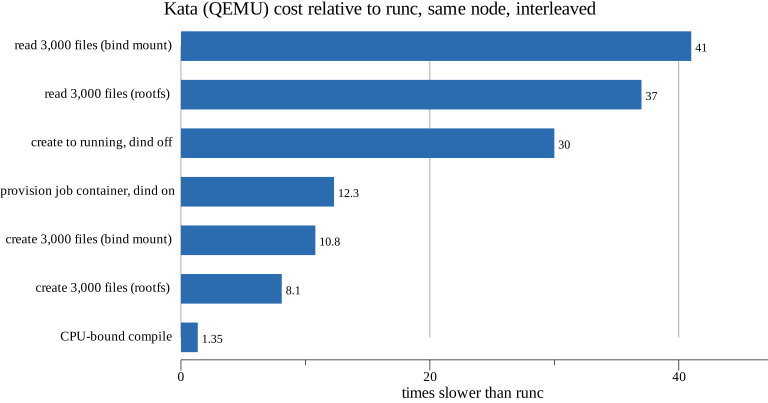
Kata containers are safer for CI, but slower. Starting one takes 12x longer, which is fine. Reading small files is about 40x slower for the entire job, which isn't.

7-Minute Read

Bar chart of Kata slowdown versus runc for each measurement

Of the three platforms ephemerd runs jobs on, Linux has the weakest isolation. Windows jobs get a Hyper-V isolated container with its own kernel. macOS jobs get a whole VM. A Linux job is an ordinary runc container sharing the host kernel. A kernel escape from a Linux job is a host compromise. Kata Containers fixes that by putting each container in a lightweight VM with its own kernel. It plugs into containerd as just another runtime handler. So I added it in #155, measured it, and left it off…

Security and Performance Hardening of a Rust Database Proxy

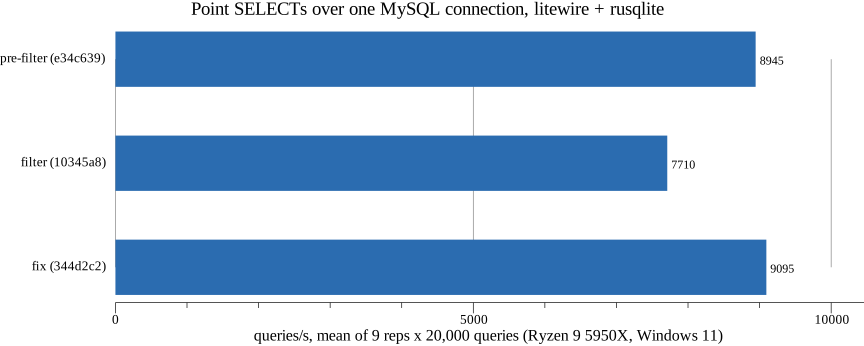
What a week of hardening litewire turned up. A dependency had a memory bug, one site could open its neighbor's database, a security rule lived only in a comment and every query paid for a needless 1 MB clear.

11-Minute Read

Bar chart of point SELECT throughput over the litewire MySQL frontend at three revisions: before the command filter, with the filter, and with the poll_read fix

litewire is the piece of ePHPm that lets PHP apps talk MySQL to a SQLite file. I wrote about how it works and about the MySQL quirks WordPress depends on. This one is the less visible half of August:

Rolling Your Own KV Store Instead of Embedding Redis

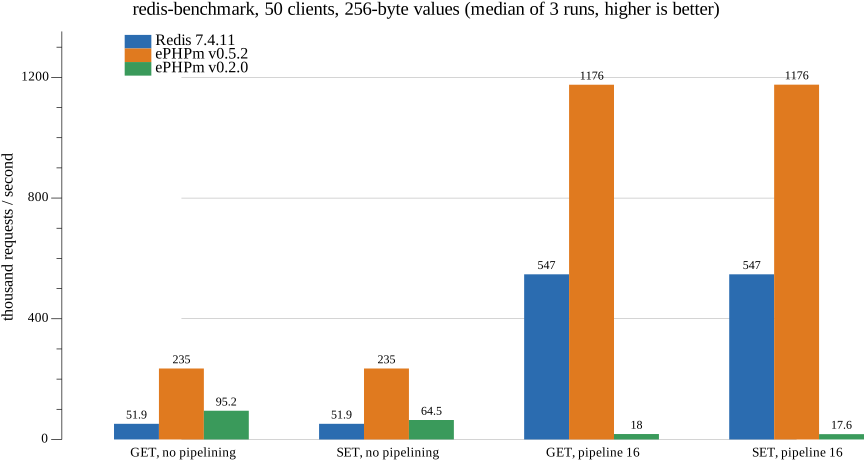
Why ePHPm has its own Redis-compatible cache built in instead of running Redis. It also covers a bug that hid in it for four months and how it compares to real Redis on the same machine.

11-Minute Read

Bar chart of redis-benchmark GET and SET throughput against Redis 7.4, ePHPm v0.5.2 and ePHPm v0.2.0

Every PHP deployment I’ve run eventually grew a Redis. Sessions, the WordPress object cache, Laravel’s cache and locks, rate limiting. ePHPm is supposed to be one binary that replaces nginx + php-fpm + Redis, so it needed a cache in the box. I didn’t want to write one. This post covers why I did anyway and how it’s built. It also covers the bug that sat in its eviction code from March until last month. Then I compare it against a stock Redis on the same machine with…

Database Connection Pooling with Smart Reset

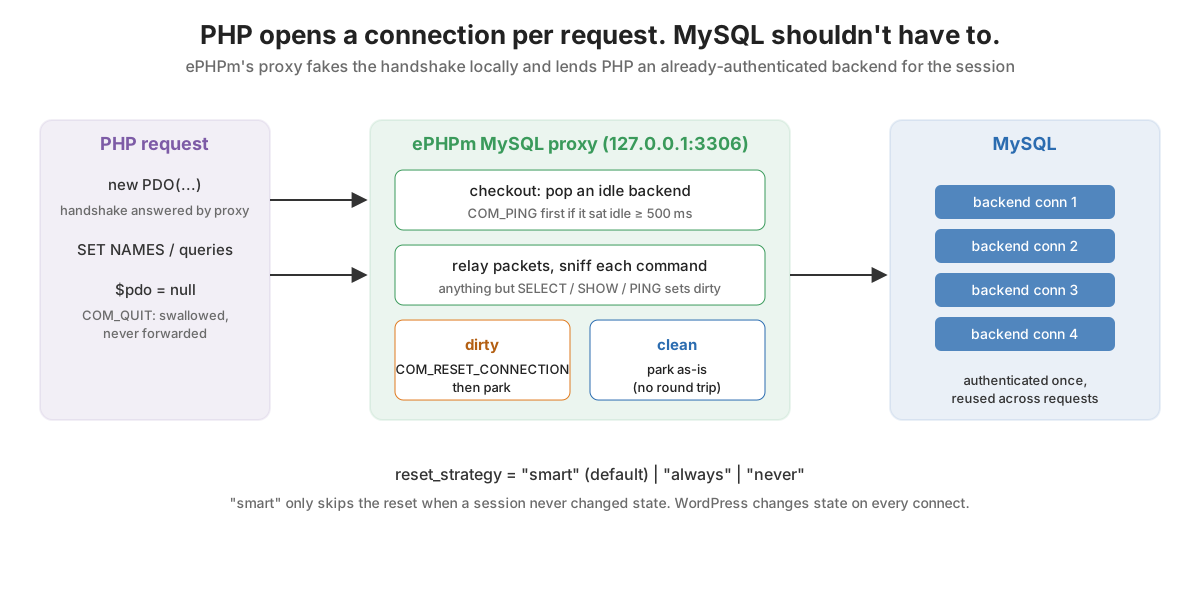
PHP opens a new MySQL connection on every request, but ePHPm reuses them and cleans up only the ones that need it. Here's how that works, two bugs it had and how much load it takes off MySQL.

10-Minute Read

PHP request connecting to the ePHPm MySQL proxy, which lends it a pooled backend connection and resets it only if the session was dirtied

PHP’s share-nothing model is one of its best properties. It has one expensive side effect: a request can’t keep a database connection for the next request. php-fpm gives you PDO::ATTR_PERSISTENT and mysqli’s p: hosts. But those are per-worker-process. PDO’s keep whatever session state the last request left behind. mysqli at least resets the session with COM_CHANGE_USER on reuse. And almost nobody turns them on. So in practice every PHP request does a TCP connect, a MySQL…

Recent Posts

Categories

About

Luther is a 20+ year software veteran specializing in backend APIs and architecting products. Employed at SUSE as the Team Lead for the Containers on Windows Team working on Rancher + Kubernetes