Luther Monson, Staff Software Engineer at SUSE

Luther Monson

Go by way of PHP · Containers · VMs · Windows · Kubernetes

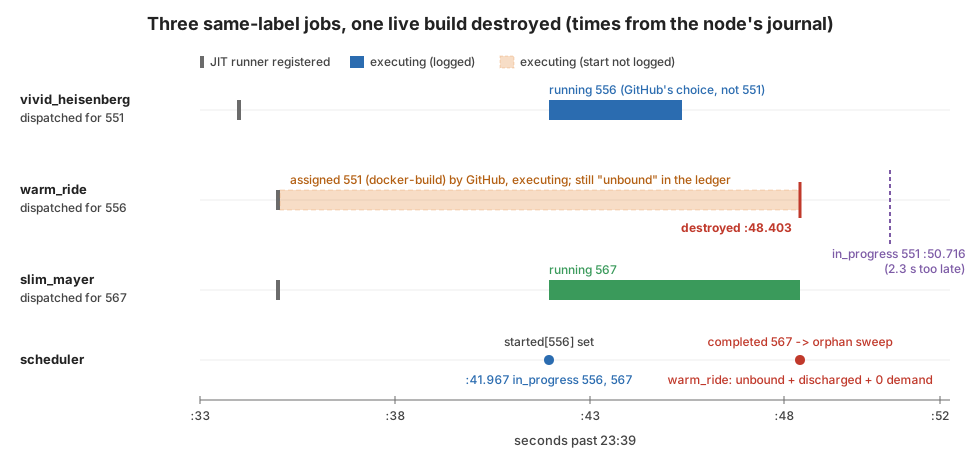
Webhooks Arrive Out of Order: How My Scheduler Killed Live Builds

ephemerd's orphan sweep trusted webhook history over reality and destroyed a runner mid-build. Now the rules only nominate, and a live busy check gets a veto.
9-Minute Read

Timeline of three same-label jobs where a runner executing a build is destroyed 2.3 seconds before its in_progress webhook arrives

The scheduler in ephemerd is event-driven. GitHub sends a workflow_job webhook when a job is queued, when it starts and when it completes. ephemerd creates and destroys runners to match. For a while that worked well enough that I stopped thinking about it. Then a docker-build job failed with “The self-hosted runner lost communication with the server”. I pulled the node’s journal. ephemerd had destroyed that runner itself, on purpose, while it was running the build.
Windows Grab-Bag: SIGTERM That Doesn't Exist and Sparse Files That Break Docker

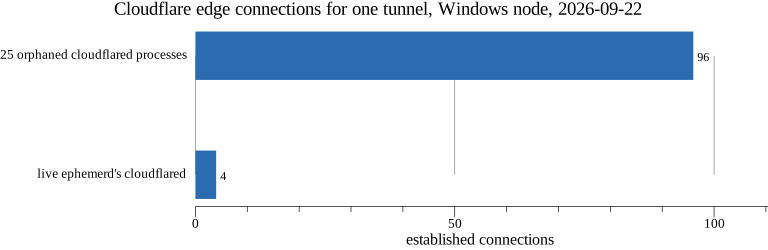
Go can't SIGTERM a child on Windows, so ephemerd's cloudflared processes piled up. Separately, Delivery Optimization's sparse temp files broke its Windows image layer commits.

7-Minute Read

Bar chart: 96 Cloudflare edge connections held by orphaned cloudflared processes versus 4 for the live daemon

Two short ones from the Windows node of ephemerd from the last few weeks. Neither is complicated once you know what’s going on. Both took longer than they should have to find, because the failure showed up a long way from the cause.

Bind Mounts Across Mount Namespaces: Four PRs and a Container Escape

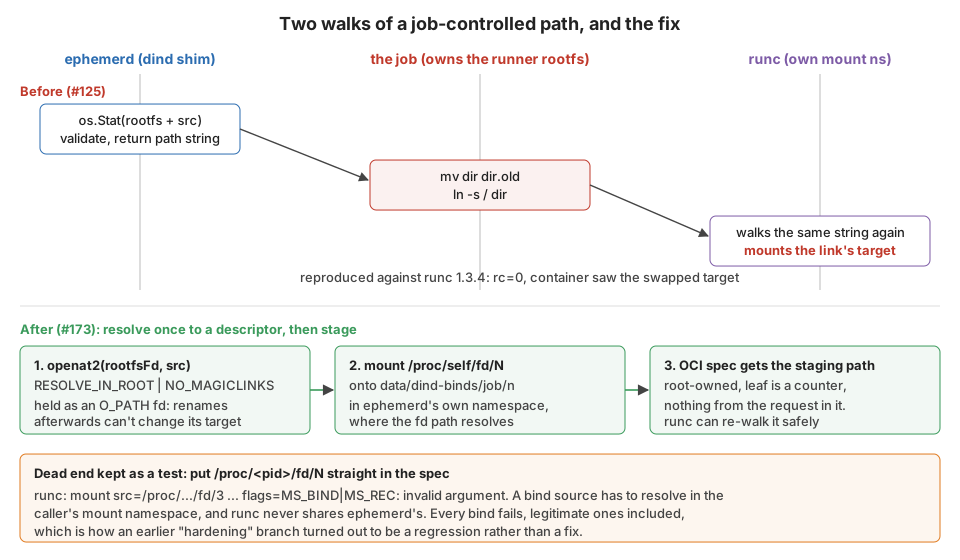
Making GitHub Actions container: jobs work through ephemerd's Docker API shim took four tries, then a TOCTOU race turned the working version into an escape.

8-Minute Read

Sequence diagram of the bind mount TOCTOU race and the openat2 plus staging fix

GitHub Actions has a container: key that runs a job’s steps inside an image of your choosing. It’s popular because it gives you a reproducible toolchain without building a custom runner image. On a self-hosted runner it works by having the runner drive Docker. On ephemerd, “Docker” is a shim that speaks the Docker API and creates containers in containerd. Getting bind mounts right through that shim took four PRs in a week. A couple of months later the version that worked…

Kata Containers for CI: Boot Cost Isn't the Problem, File I/O Is

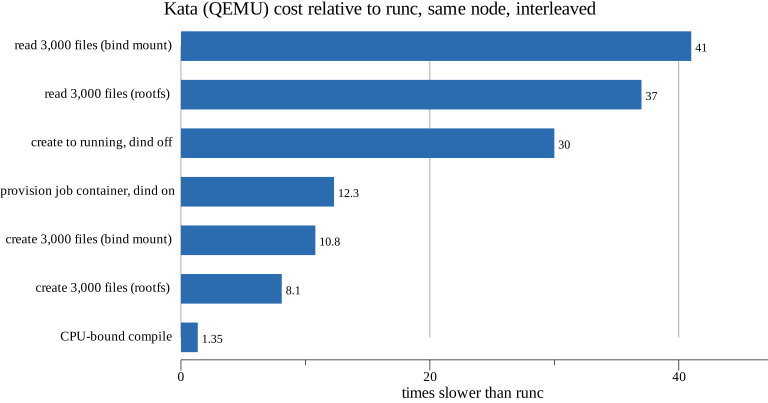
Kata containers are safer for CI, but slower. Starting one takes 12x longer, which is fine. Reading small files is about 40x slower for the entire job, which isn't.

7-Minute Read

Bar chart of Kata slowdown versus runc for each measurement

Of the three platforms ephemerd runs jobs on, Linux has the weakest isolation. Windows jobs get a Hyper-V isolated container with its own kernel. macOS jobs get a whole VM. A Linux job is an ordinary runc container sharing the host kernel. A kernel escape from a Linux job is a host compromise. Kata Containers fixes that by putting each container in a lightweight VM with its own kernel. It plugs into containerd as just another runtime handler. So I added it in #155, measured it, and left it off…

My iptables Rule Matched 0 Packets in 9.8 GB

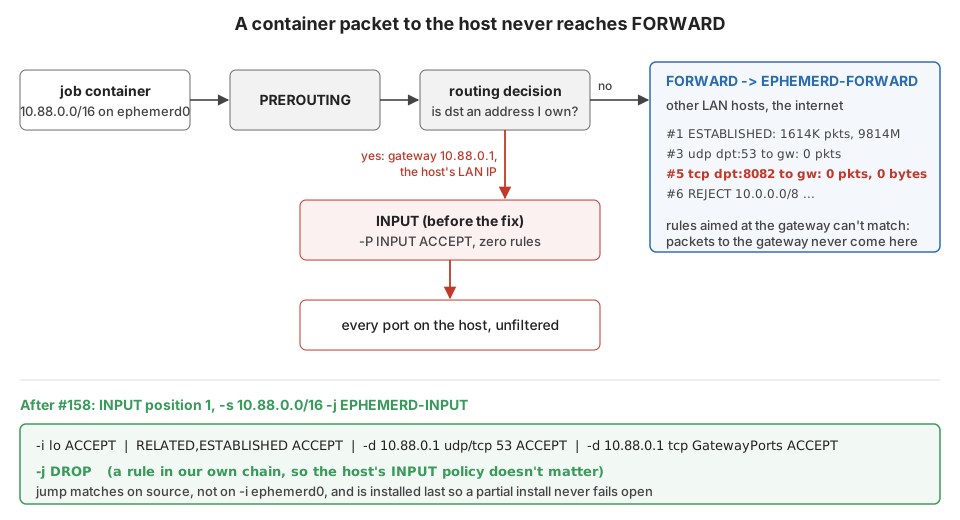
Container-to-host traffic goes through INPUT, not FORWARD, so ephemerd's carefully written allow-list never matched a single packet.

8-Minute Read

Netfilter flow showing container traffic to the host taking INPUT instead of FORWARD

After a week of Windows firewall rules that listed fine and enforced nothing, I went back to the Linux side of ephemerd feeling pretty good about it. iptables is the boring, well-understood one. Then I looked at the packet counters on a live node. I found a rule that had never matched a packet in its life. That node had pushed 9.8 GB through the same chain.

Five Ways to Not Firewall a Windows Container (and the One That Works)

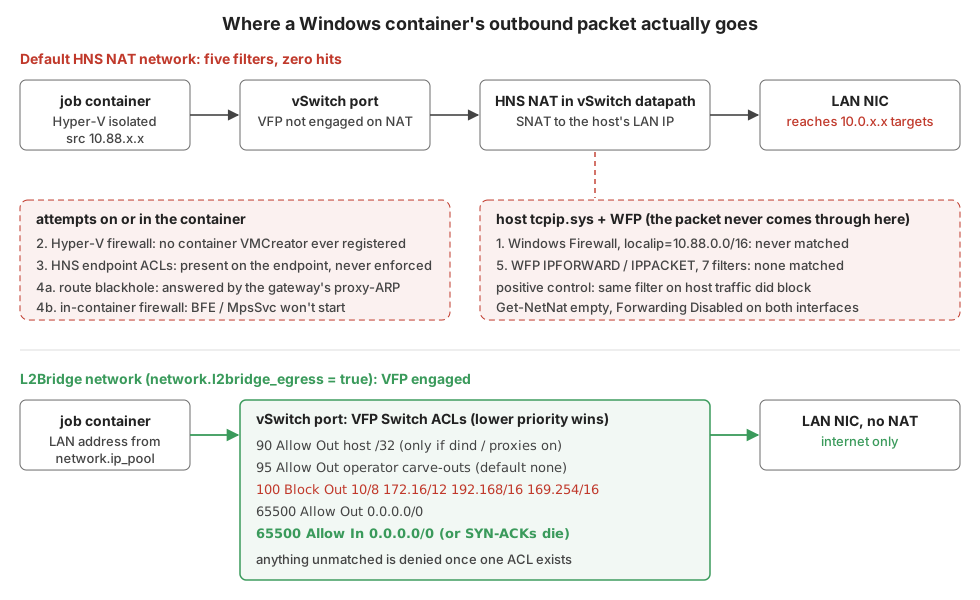
Five different Windows firewall approaches failed to stop a container from reaching my home network. The sixth, a different network mode for the container, finally worked.

10-Minute Read

Packet path of a Windows container on an HNS NAT network versus an L2Bridge network

ephemerd runs CI jobs from pull requests. One of the rules is that a job can reach the internet but not my LAN. On Linux that’s a few iptables rules in the FORWARD path, and I didn’t think about it much. On Windows I spent about a week finding out how many ways there are to write a firewall rule that Windows accepts, lists and never applies.

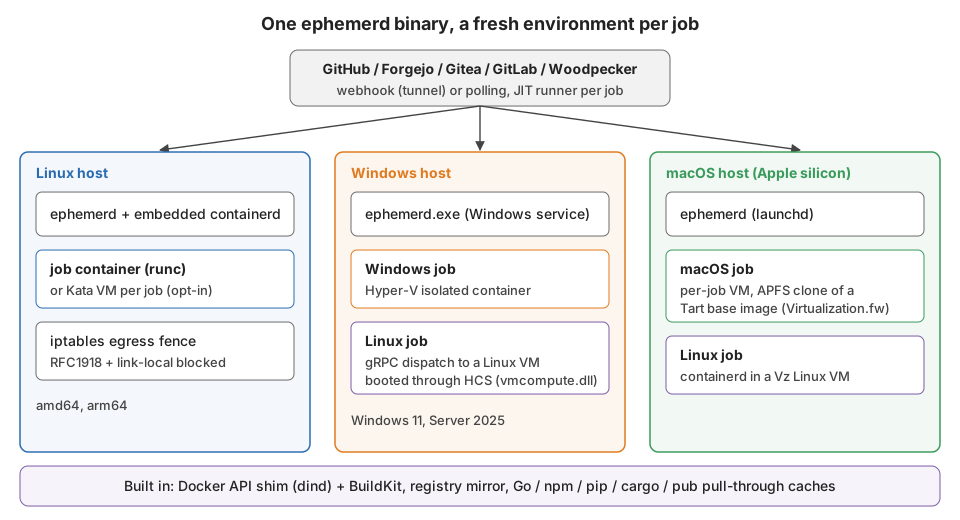
ephemerd: One Daemon, a Fresh Runner Per Job, Every OS

A single Go binary that runs self-hosted GitHub Actions runners on Linux, Windows and macOS, with a new container or VM for every job.

6-Minute Read

ephemerd architecture across Linux, Windows and macOS hosts

I have CI that needs Linux amd64, Linux arm64, Windows and macOS. GitHub-hosted runners for all four get expensive fast, especially the arm64 and Mac minutes. Self-hosted runners fix the bill and create a different problem. A stock actions/runner on a box you own runs whatever the workflow says. It keeps whatever the last job left behind. And it’s one fork PR away from somebody running code on your LAN.

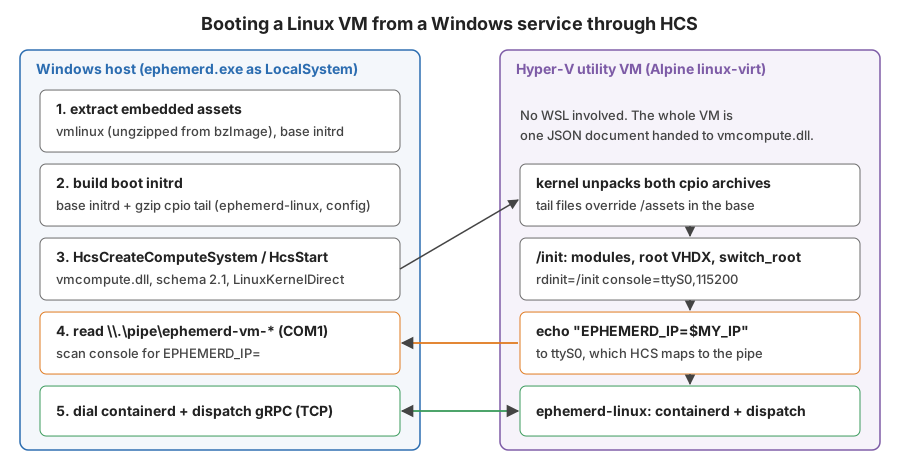
Escaping WSL: Booting My Own Linux VM Through Hyper-V's HCS API

WSL2 refuses to run under LocalSystem, so ephemerd boots an Alpine kernel directly through vmcompute.dll instead.

9-Minute Read

Diagram of ephemerd booting a Linux VM through HCS and reading its IP from the serial console

I’ve been building ephemerd, a daemon that runs self-hosted GitHub Actions runners with a fresh environment per job. On a Windows host, Windows jobs run in Hyper-V isolated containers. Linux jobs still need a Linux kernel from somewhere. The obvious answer on Windows in 2026 is WSL2, and that’s what I used first. It worked great from my terminal and fell over the moment ephemerd became a real Windows service.

Recent Posts

Categories

About

Luther is a 20+ year software veteran specializing in backend APIs and architecting products. Employed at SUSE as the Team Lead for the Containers on Windows Team working on Rancher + Kubernetes