My iptables Rule Matched 0 Packets in 9.8 GB
Container-to-host traffic goes through INPUT, not FORWARD, so ephemerd's carefully written allow-list never matched a single packet.
After a week of Windows firewall rules that listed fine and enforced nothing, I went back to the Linux side of ephemerd feeling pretty good about it. iptables is the boring, well-understood one. Then I looked at the packet counters on a live node. I found a rule that had never matched a packet in its life. That node had pushed 9.8 GB through the same chain.
The rules I thought I had
Job containers sit on a CNI bridge, 10.88.0.0/16, with the host on 10.88.0.1. ephemerd puts its egress policy in its
own chain, EPHEMERD-FORWARD. FORWARD jumps to it for anything to or from the container subnet. From a live node:
-P INPUT ACCEPT
-P FORWARD ACCEPT
-N EPHEMERD-FORWARD
-A FORWARD -d 10.88.0.0/16 -j EPHEMERD-FORWARD
-A FORWARD -s 10.88.0.0/16 -j EPHEMERD-FORWARD
-A EPHEMERD-FORWARD -m conntrack --ctstate RELATED,ESTABLISHED -j ACCEPT
-A EPHEMERD-FORWARD -s 10.88.0.0/16 -d 10.88.0.0/16 -j ACCEPT
-A EPHEMERD-FORWARD -d 10.88.0.1/32 -p udp -m udp --dport 53 -j ACCEPT
-A EPHEMERD-FORWARD -d 10.88.0.1/32 -p tcp -m tcp --dport 53 -j ACCEPT
-A EPHEMERD-FORWARD -d 10.88.0.1/32 -p tcp -m tcp --dport 8082 -j ACCEPT
-A EPHEMERD-FORWARD -d 10.0.0.0/8 -j REJECT --reject-with icmp-net-unreachable
-A EPHEMERD-FORWARD -d 172.16.0.0/12 -j REJECT --reject-with icmp-net-unreachable
-A EPHEMERD-FORWARD -d 192.168.0.0/16 -j REJECT --reject-with icmp-net-unreachable
-A EPHEMERD-FORWARD -d 169.254.0.0/16 -j REJECT --reject-with icmp-net-unreachable
-A EPHEMERD-FORWARD -j ACCEPT
Reads well. DNS and the Go module proxy (tcp/8082) on the gateway are allowed. The private ranges are rejected. The
internet is open. The GatewayPorts config setting is the allow-list of host ports a job may reach. The security docs
said containers can’t reach 10.0.0.0/8.
The counters
iptables -S tells you what rules exist. iptables -L -v -n --line-numbers tells you what they’ve done:
Chain EPHEMERD-FORWARD (2 references)
num   pkts bytes target   prot  source        destination
1    1614K 9814M ACCEPT   0     0.0.0.0/0     0.0.0.0/0     ctstate RELATED,ESTABLISHED
2        0     0 ACCEPT   0     10.88.0.0/16  10.88.0.0/16
3        0     0 ACCEPT   17    0.0.0.0/0     10.88.0.1     udp dpt:53
4        0     0 ACCEPT   6     0.0.0.0/0     10.88.0.1     tcp dpt:53
5        0     0 ACCEPT   6     0.0.0.0/0     10.88.0.1     tcp dpt:8082
6        0     0 REJECT   0     0.0.0.0/0     10.0.0.0/8    reject-with icmp-net-unreachable
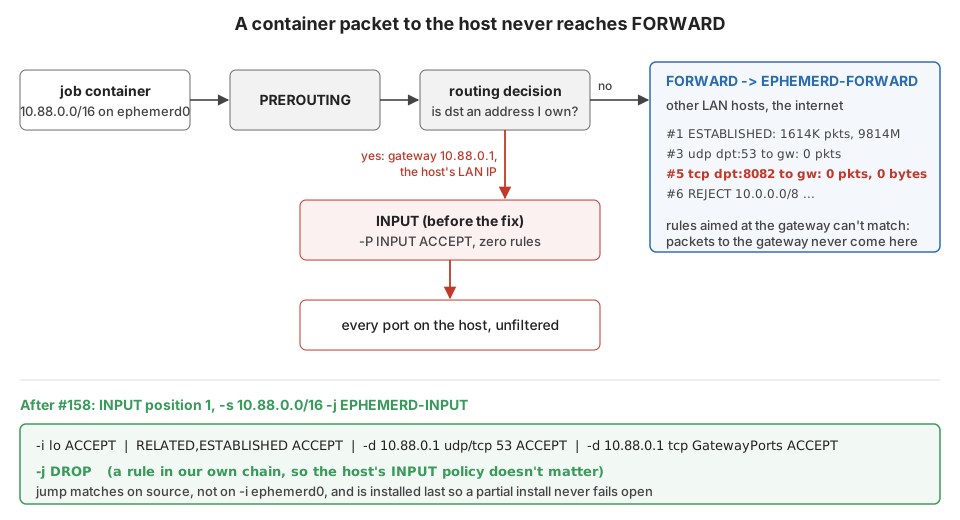
Rule 5 is the module proxy allow. Zero packets, zero bytes, next to 9.8 GB of established traffic in rule 1. And the module proxy isn’t idle. It’s in daily use.
Why: local delivery goes through INPUT
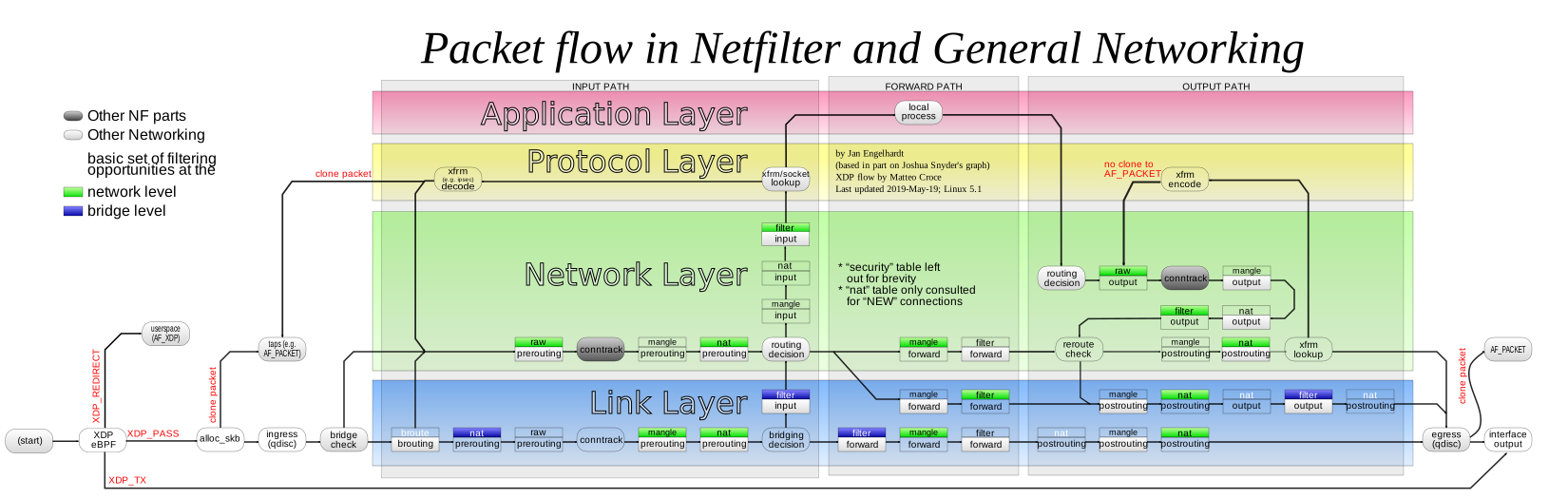
This one is in every netfilter diagram, and I still walked right past it. After PREROUTING the kernel makes a routing
decision. If the destination is an address the host itself owns, the packet is delivered locally and goes through INPUT.
Only packets the host is going to route somewhere else go through FORWARD.
The bridge gateway 10.88.0.1 is an address the host owns. Say a container talks to the module proxy, DNS on the
gateway or another service listening on the host. That packet goes PREROUTING, routing decision, INPUT, local socket. It
never touches FORWARD, so nothing in EPHEMERD-FORWARD can match it. Rules 3, 4 and 5 weren’t allowing anything. The
traffic was getting through because nothing was looking at it.
That had two worse consequences than a dead allow rule:
- The allow-list wasn’t a list. Anything ephemerd or the operator bound on the gateway was reachable from every job,
whatever
GatewayPortssaid. The onlyINPUTrules ephemerd ever wrote were drops for its own control ports. Those were only configured on the in-VM worker path. A bare-metal Linux node installed noINPUTrules at all, and the distro default isINPUTpolicyACCEPT. - The RFC1918 block had a host-shaped hole. The node’s own LAN address (something like
10.0.0.44/24) is inside10.0.0.0/8. Containers couldn’t reach other machines on10.0.0.0/8. But they could reach the host itself on every port, because that’s local delivery too.
There was a third, smaller one inside the Linux VM on Windows and macOS hosts. The control-port drops matched
-d <gateway>. But the in-VM dispatch gRPC server binds 0.0.0.0. So it was also listening on the VM’s eth0 address,
where that drop doesn’t apply.
How I found it
Sideways, at first. Getting the Docker API to work under Kata meant moving it from a unix socket to a TCP port on the
gateway. The Docker API authenticates nothing, so that port had to be scoped to the one container that owns it. That
per-job chain (EPHEMERD-DIND) had to be jumped from INPUT as well as FORWARD. INPUT is where gateway-addressed
packets land. The Kata PR noted that this meant GatewayPorts alone wasn’t constraining anything. A later security
sweep pinned it down with the counters above (issue #156).
The fix: EPHEMERD-INPUT
PR #158 adds a second chain for the container-to-host path. INPUT jumps to it at position 1 for anything sourced from
the container subnet. It ends in an unconditional DROP:
func containerInputRules(gateway string, gatewayPorts, controlPorts []int) [][]string {
	rules := [][]string{
		{inputChainName, "-i", "lo", "-j", "ACCEPT"},
		{inputChainName, "-m", "conntrack", "--ctstate", "RELATED,ESTABLISHED", "-j", "ACCEPT"},
	}
	for _, proto := range []string{"udp", "tcp"} {
		rules = append(rules, []string{
			inputChainName, "-d", gateway, "-p", proto, "--dport", "53", "-j", "ACCEPT",
		})
	}
	// ... one ACCEPT per GatewayPorts entry, -d gateway, skipping control ports ...

	// Default deny. DROP rather than REJECT to give a job no ICMP oracle
	// for probing which host services exist.
	rules = append(rules, []string{inputChainName, "-j", "DROP"})
	return rules
}
The details that make it hold up:
- The deny is a rule in our chain, not the absence of rules, so it doesn’t matter what the host’s
INPUTpolicy is. - The jump matches on source,
-s 10.88.0.0/16, rather than-i ephemerd0. A packet arriving from the LAN with a forged container address gets caught too. RELATED,ESTABLISHEDcan’t be abused. The opening SYN of a new connection isctstate NEWand hits theDROP. The accept only covers replies to connections the host opened toward a container.- Every allow is scoped
-d <gateway>. An unscoped port allow would also open that port on the host’s LAN address, and a test asserts none exist. - The
loaccept is deliberate. The host reaching its own module proxy on the bridge address goes outlowith a source inside the container subnet. A container can’t forge that. It has its own network namespace and arrives on the bridge. - The jump goes in last. Say a chain is half-built when
INPUTalready points at it. It ends at the implicitRETURN, not theDROP, and fails open for as long as the install takes:
// Jump last, so the chain is never half-built while INPUT already points
// at it — a partially built chain ends at the implicit RETURN, not at the
// DROP, which would fail open for as long as the install took.
jump := containerInputJumpRule(l.cfg.subnet())
if err := iptables(append([]string{"-C"}, jump...)...); err != nil {
	if err := iptables(append([]string{"-I", jump[0], "1"}, jump[1:]...)...); err != nil {
		return fmt.Errorf("inserting %s jump rule: %w", inputChainName, err)
	}
}
There’s deliberately no IPv6 mirror. The CNI bridge is IPv4-only, so containers have no v6 address and no v6 path to the host. A v6 default-deny would have to match on destination, since there’s no v6 container subnet to match a source against. It would take out the host’s own link-local and NDP traffic on any dual-stack node. That would be a real outage to close a hole that doesn’t exist.
The old GatewayPorts allows in EPHEMERD-FORWARD stayed, with a comment saying they aren’t the enforcement point. I
like the chain being a complete statement of intent even where it’s redundant.
Before merging, the generated iptables argv was replayed inside a throwaway ip netns on a fleet node. That checked
real-kernel syntax and that -C made it idempotent. Then the namespace was torn down and the node’s real chains diffed
to make sure nothing changed.
And if the rules don’t install, don’t run jobs
Looking at all this made me notice the other half of the problem. InstallFirewallRules() could fail on Linux from
missing iptables or no CAP_NET_ADMIN. When it did, ephemerd logged a warning and kept going. A node with no
containment at all would happily run fork PRs. #179 makes that fatal
before the scheduler starts:
func enforceFirewallInstall(goos string, install func() error, log *slog.Logger) error {
	if err := install(); err != nil {
		if goos == "linux" {
			return fmt.Errorf("installing container firewall rules: %w — refusing to run jobs without container egress/host containment (fail closed)", err)
		}
		log.Warn("failed to install firewall rules (containers may access LAN)", "error", err)
	}
	return nil
}
serve() returns before sched.Run, so there’s no code path that dispatches a job without the chains present. systemd
shows a failed unit, which is a lot easier to notice than a log line. It’s the same stance as the Kata preflight. If the
config promises isolation and the host can’t deliver it, refuse to start rather than quietly downgrading.
Check the counters
The lesson I’m keeping from this one: a rule that never matches looks exactly like a rule that works. iptables -S
showed me a correct policy. The -v counters showed me that half of it was decoration. When I add a firewall rule now, I
generate the traffic it’s meant to match and watch the counter move. It’s the same way I’d want to see a test fail
before I trust it passing.
iptables -L EPHEMERD-INPUT -v -n --line-numbers
Links
- ephemerd (issue #156 and PR #158 have the full analysis)
- #179 fail closed when the firewall can’t install
- Netfilter packet flow (Wikimedia Commons)