
Luther Monson, Staff Software Engineer at SUSE

Luther Monson

Go by way of PHP · Containers · VMs · Windows · Kubernetes

Webhooks Arrive Out of Order: How My Scheduler Killed Live Builds

ephemerd's orphan sweep trusted webhook history over reality and destroyed a runner mid-build. Now the rules only nominate, and a live busy check gets a veto.
9-Minute Read

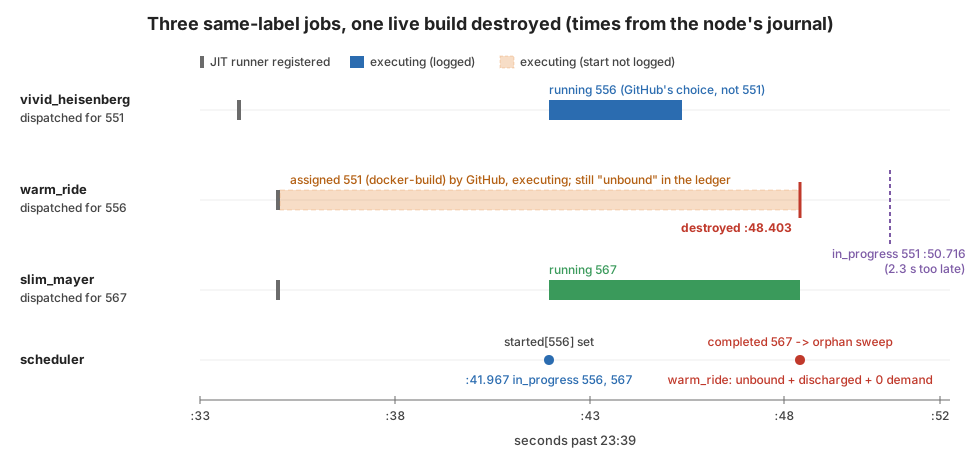
Timeline of three same-label jobs where a runner executing a build is destroyed 2.3 seconds before its in_progress webhook arrives

The scheduler in ephemerd is event-driven. GitHub sends a workflow_job webhook when a job is queued, when it starts and when it completes. ephemerd creates and destroys runners to match. For a while that worked well enough that I stopped thinking about it. Then a docker-build job failed with “The self-hosted runner lost communication with the server”. I pulled the node’s journal. ephemerd had destroyed that runner itself, on purpose, while it was running the build.
Gossip-Based Clustering for PHP Apps

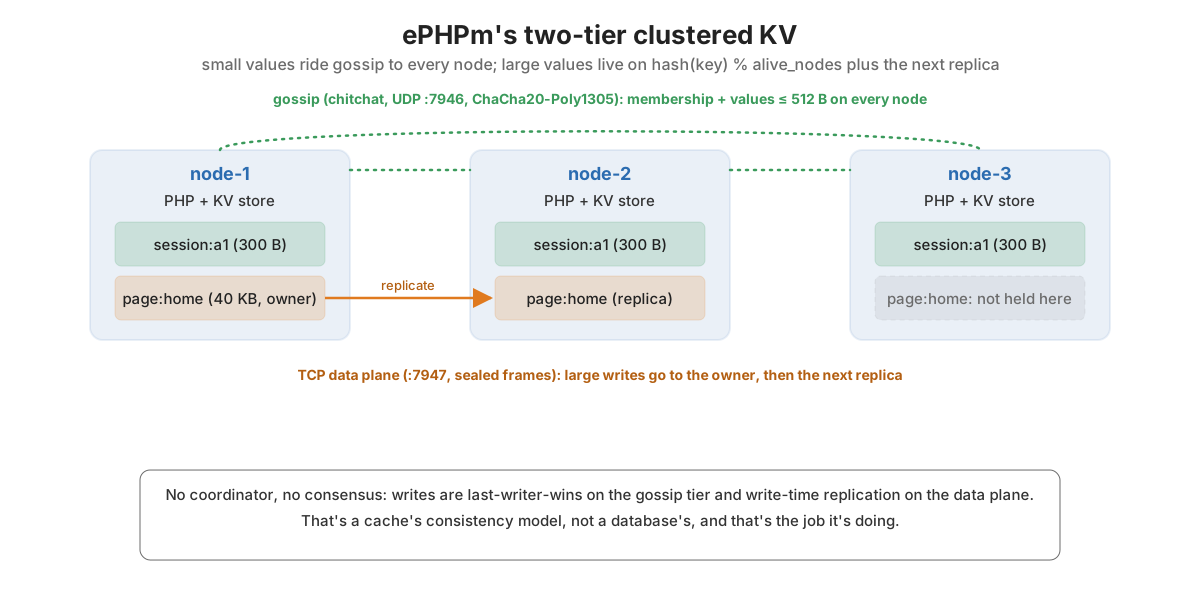
How ePHPm servers find each other, share data and handle a server joining or leaving. It also measures how fast a write reaches the other servers and covers a bug I found while measuring it.

11-Minute Read

Three ePHPm nodes: small values replicated to every node over gossip, a large value stored on its owner and one replica over a TCP data plane

Most PHP developers never touch clustering primitives. That’s by design. PHP is share-nothing. Each request starts from zero, and anything shared lives somewhere else. Sessions go in Redis. Cache goes in Redis or Memcached. Locks go in Redis. When you run two app servers, the “cluster” is really two stateless boxes pointed at the same Redis. That works until Redis is the thing you’re trying not to run.

Recent Posts

Categories

About

Luther is a 20+ year software veteran specializing in backend APIs and architecting products. Employed at SUSE as the Team Lead for the Containers on Windows Team working on Rancher + Kubernetes




