
Luther Monson, Staff Software Engineer at SUSE

Luther Monson

Go by way of PHP · Containers · VMs · Windows · Kubernetes

Cross-Platform Process Containment: Job Objects vs Process Groups vs cgroups

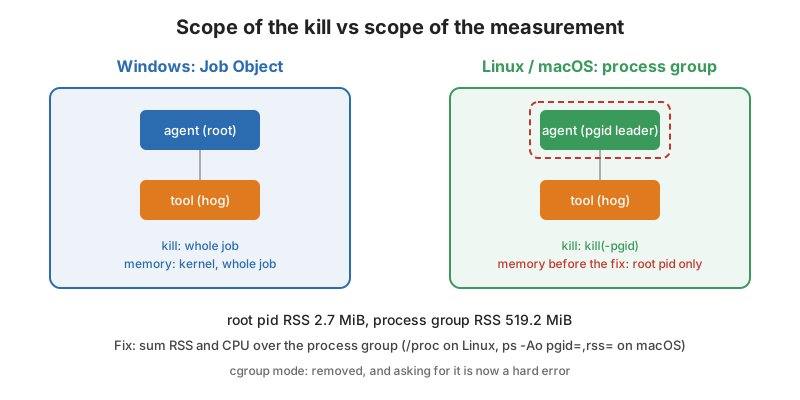
How shipmates bounds and tears down agent process trees on Windows, Linux and macOS. It also covers why I deleted 1,206 lines of cgroup code and the grandchild that escaped the memory cap everywhere except my dev box.
8-Minute Read

Agent process tree with the scope of kill and measurement on Windows, Linux and macOS

Every turn a shipmates crew member takes is a subprocess. It’s claude or the codex app-server. That in turn spawns shells, go test, npm or whatever the task calls for. Two things have to be true about that tree. When a turn ends or gets killed, the whole tree goes, including the grandchildren. And if somebody sets a memory or CPU budget, the budget applies to the whole tree, not just the process I happened to start.
Per-Tenant Network Policy in One Process: ePHPm's eBPF Thread Tags

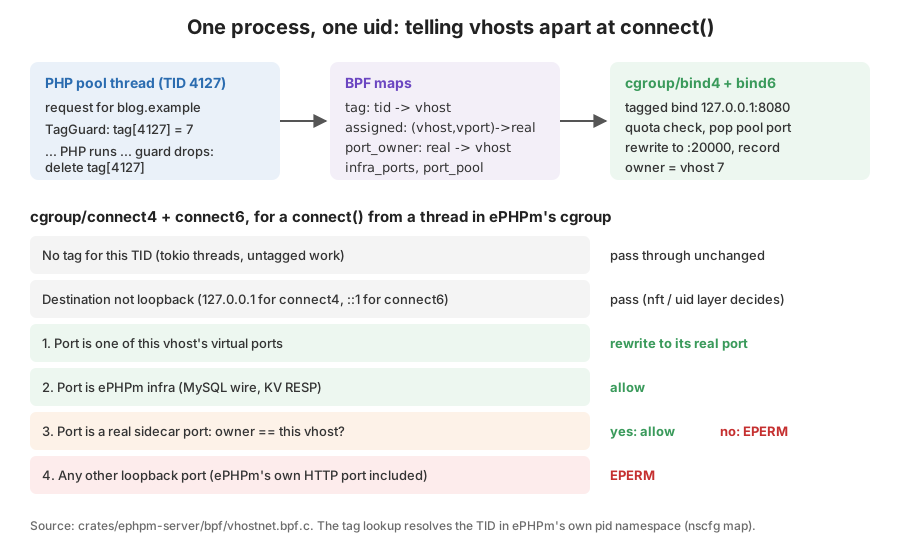
Every site on an ePHPm server runs inside the same process, so a normal firewall can't tell them apart. A small eBPF program tags each thread with its site. It keeps sites from reaching each other's local ports for under a microsecond per connection.

17-Minute Read

Flow from a PHP pool thread writing its vhost tag into a BPF map, through the bind and connect cgroup hooks, to allow, rewrite or EPERM

In multi-tenant mode ePHPm serves every site in sites_dir from one process. Every tenant’s PHP runs as the same OS user on the same pool of ZTS threads. A thread that just served blog.example will serve shop.example a few milliseconds later. That’s the density win. It also means the kernel has no idea which tenant is behind a given connect(). As far as Linux is concerned it’s all ephpm-web.

Recent Posts

Categories

About

Luther is a 20+ year software veteran specializing in backend APIs and architecting products. Employed at SUSE as the Team Lead for the Containers on Windows Team working on Rancher + Kubernetes




